

 Image 1 of 3
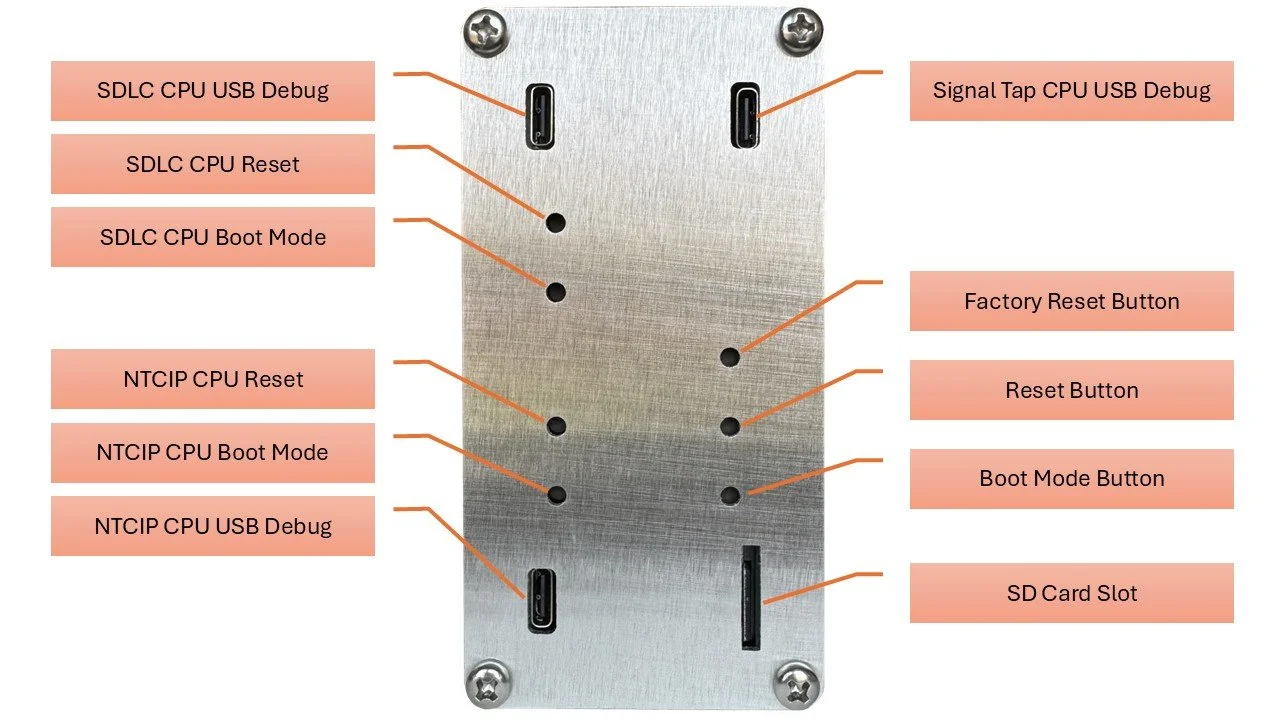 Image 2 of 3
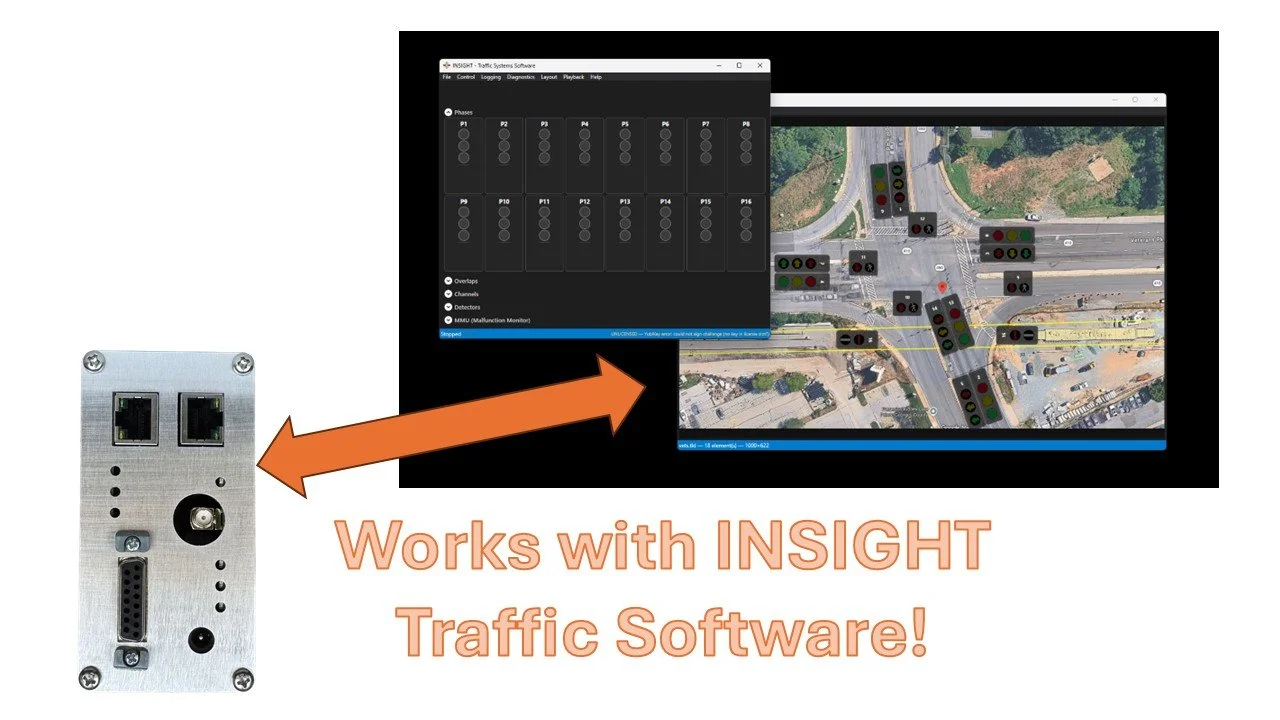 Image 3 of 3
Signal Tap is a dedicated traffic signal data monitoring and recording platform, designed to provide a comprehensive view of controller and cabinet activity from a single device.
By passively monitoring the cabinet's high-speed serial bus, collecting NTCIP data from the connected controller, and interfacing directly with capable MMUs, Signal Tap consolidates every layer of intersection operation into one synchronized recording — providing a consistent timeline for troubleshooting, system analysis, and remote monitoring.
Signal Tap connects directly to the cabinet's high-speed serial bus and passively records every transmission — both controller commands and device responses. This exposes cabinet-level communications that cannot be observed through NTCIP monitoring alone.
Supported cabinet bus protocols:
NEMA TS2 SDLC (Type 1 and Type 2) — full monitoring of Controller Unit ↔ TF BIU / DET BIU / MMU traffic
ATC 5301 SB#1 (HDLC) — planned, extending Signal Tap into advanced transportation controller cabinets
Because Signal Tap sits on the bus as a passive listener, it captures everything that happens — regardless of whether the controller reports it upstream.
Signal Tap simultaneously polls the connected controller over NTCIP to capture a wide range of operational data, including:
Phase states and status
Channel states
Overlap states
Detector activity
Preemption activity
Current coordination and time-plan information
Additional user-configurable NTCIP data points
IP-capable EDI MMUs can be queried and recorded alongside cabinet bus and NTCIP data, integrating MMU fault status, channel information, and voltage monitoring into the same synchronized timeline.
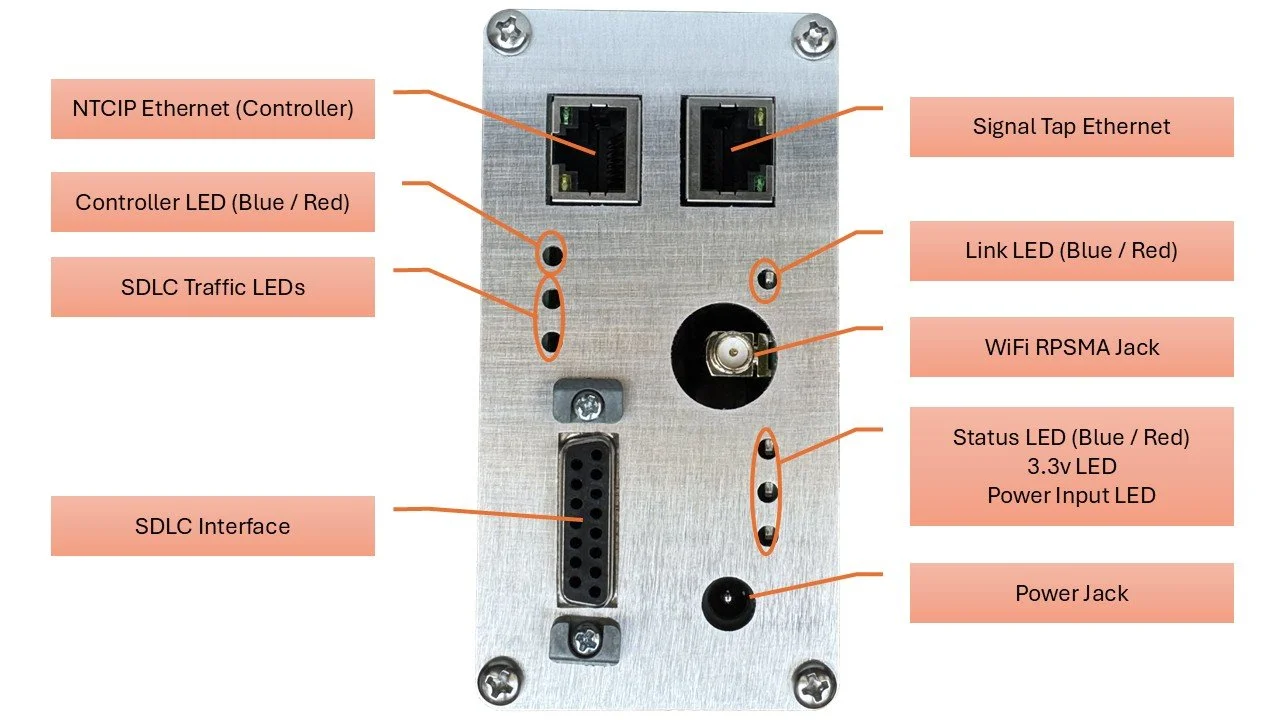
Signal Tap includes two independent Ethernet interfaces, allowing the traffic controller network to remain physically separate from the network used for remote access to Signal Tap.
An integrated web interface provides real-time viewing of collected data directly from a browser, along with access to stored recordings and downloadable data files.
Signal Tap also includes Wi-Fi — hosting its own local network or joining an existing one — making on-site access convenient during installation, troubleshooting, and field maintenance without needing a laptop-to-cabinet cable.
Signal Tap pairs directly with Insight Traffic Software, extending Insight beyond NTCIP-based monitoring.
Live data can be streamed from Signal Tap into Insight for remote viewing, while recorded data can be downloaded and replayed using the same visualization environment. Engineers and technicians can examine historical cabinet activity as though they were watching the system operate in real time.
The result is a common interface for analyzing NTCIP, cabinet bus, MMU, and other cabinet data together — rather than relying on separate tools and disconnected logs.
An onboard SD card provides continuous local data storage, allowing Signal Tap to maintain historical cabinet data even when a remote connection is unavailable.
When an event needs to be investigated, the recorded data is already there — providing a detailed history of what the controller commanded, what cabinet devices reported, and how the intersection responded.
One device. Multiple data sources. One synchronized record.
Instead of troubleshooting an intersection from isolated controller logs, MMU information, cabinet bus captures, and NTCIP snapshots, Signal Tap brings these data sources together into a consistent platform for:
Remote intersection monitoring
Troubleshooting intermittent events
Post-event analysis
Preemption analysis
Detector and phase operation analysis
Cabinet communications diagnostics
System validation and commissioning
Long-term operational data collection
Signal Tap is a dedicated traffic signal data monitoring and recording platform, designed to provide a comprehensive view of controller and cabinet activity from a single device.
By passively monitoring the cabinet's high-speed serial bus, collecting NTCIP data from the connected controller, and interfacing directly with capable MMUs, Signal Tap consolidates every layer of intersection operation into one synchronized recording — providing a consistent timeline for troubleshooting, system analysis, and remote monitoring.
Signal Tap connects directly to the cabinet's high-speed serial bus and passively records every transmission — both controller commands and device responses. This exposes cabinet-level communications that cannot be observed through NTCIP monitoring alone.
Supported cabinet bus protocols:
NEMA TS2 SDLC (Type 1 and Type 2) — full monitoring of Controller Unit ↔ TF BIU / DET BIU / MMU traffic
ATC 5301 SB#1 (HDLC) — planned, extending Signal Tap into advanced transportation controller cabinets
Because Signal Tap sits on the bus as a passive listener, it captures everything that happens — regardless of whether the controller reports it upstream.
Signal Tap simultaneously polls the connected controller over NTCIP to capture a wide range of operational data, including:
Phase states and status
Channel states
Overlap states
Detector activity
Preemption activity
Current coordination and time-plan information
Additional user-configurable NTCIP data points
IP-capable EDI MMUs can be queried and recorded alongside cabinet bus and NTCIP data, integrating MMU fault status, channel information, and voltage monitoring into the same synchronized timeline.
Signal Tap includes two independent Ethernet interfaces, allowing the traffic controller network to remain physically separate from the network used for remote access to Signal Tap.
An integrated web interface provides real-time viewing of collected data directly from a browser, along with access to stored recordings and downloadable data files.
Signal Tap also includes Wi-Fi — hosting its own local network or joining an existing one — making on-site access convenient during installation, troubleshooting, and field maintenance without needing a laptop-to-cabinet cable.
Signal Tap pairs directly with Insight Traffic Software, extending Insight beyond NTCIP-based monitoring.
Live data can be streamed from Signal Tap into Insight for remote viewing, while recorded data can be downloaded and replayed using the same visualization environment. Engineers and technicians can examine historical cabinet activity as though they were watching the system operate in real time.
The result is a common interface for analyzing NTCIP, cabinet bus, MMU, and other cabinet data together — rather than relying on separate tools and disconnected logs.
An onboard SD card provides continuous local data storage, allowing Signal Tap to maintain historical cabinet data even when a remote connection is unavailable.
When an event needs to be investigated, the recorded data is already there — providing a detailed history of what the controller commanded, what cabinet devices reported, and how the intersection responded.
One device. Multiple data sources. One synchronized record.
Instead of troubleshooting an intersection from isolated controller logs, MMU information, cabinet bus captures, and NTCIP snapshots, Signal Tap brings these data sources together into a consistent platform for:
Remote intersection monitoring
Troubleshooting intermittent events
Post-event analysis
Preemption analysis
Detector and phase operation analysis
Cabinet communications diagnostics
System validation and commissioning
Long-term operational data collection